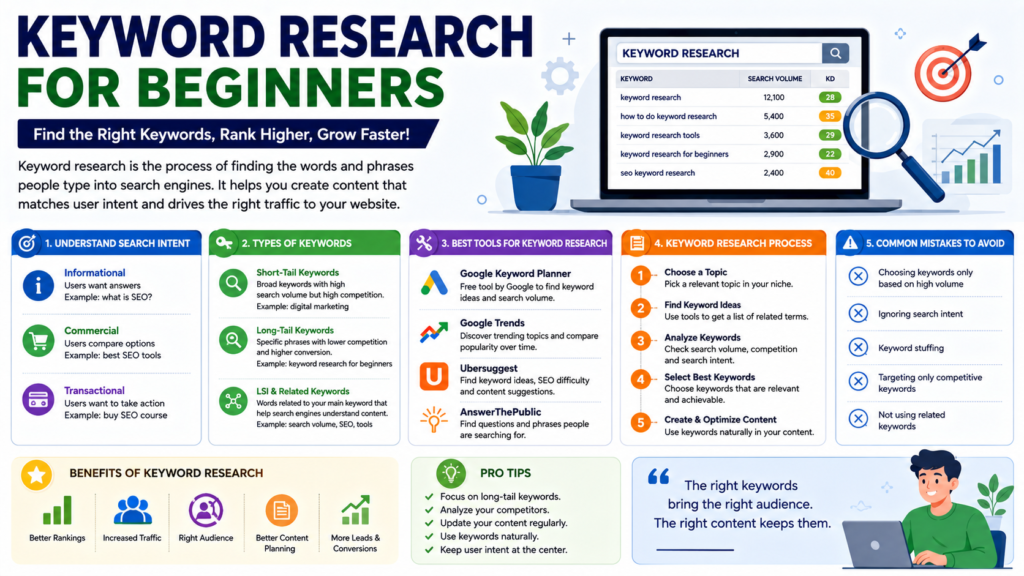
If you want to succeed in SEO and content marketing, learning keyword research is one of the first skills you should master. Whether you are writing blogs, creating websites, or running marketing campaigns, understanding what people search for online helps you create content that attracts the right audience.
In simple words, keyword research is the process of finding the words and phrases people type into search engines. By using the right keywords, you can improve visibility, attract visitors, and create content that matches user needs.
In this beginner-friendly guide, you will learn the basics of keyword research, why it is important, and how to do it step by step.
What Is Keyword Research and Why Is It Important?
Keyword research is the process of identifying search terms that users enter into search engines when looking for information, products, or services.
Benefits of proper keyword analysis include:
- Better search engine rankings
- Increased website traffic
- Improved content planning
- Higher chances of attracting the right audience
- Better understanding of customer intent
Without proper keyword planning, it becomes difficult to create content that users are actively searching for.
Understanding Search Intent and User Queries
Before selecting keywords, you should understand why people are searching.
Informational Search Terms
Users want information or answers.
Examples:
- What is SEO?
- How to start blogging?
- Digital marketing tips for beginners
Commercial Investigation Keywords
Users are researching before making a decision.
Examples:
- Best SEO tools
- Top digital marketing courses
Transactional Search Phrases
Users are ready to take action.
Examples:
- Buy SEO software
- Enroll in digital marketing training
Understanding search intent helps you choose the most relevant terms for your content.
Types of Keywords Every Beginner Should Know
Short-Tail Keywords
These are broad search terms with high search volume.
Examples:
- SEO
- Marketing
- Blogging
They are usually difficult to rank for because of strong competition.
Long-Tail Search Phrases
These are longer and more specific keywords.
Examples:
- Keyword research for beginners
- How to find keywords for a blog
Long-tail phrases often have lower competition and higher conversion potential.
LSI and Semantic Keywords
These are related words that help search engines understand your content.
Examples for keyword research:
- Search volume
- Keyword difficulty
- Search intent
- SEO keywords
- Content optimization
Using related terms naturally improves content relevance.
Best Keyword Research Tools for Beginners
Many free tools can help you find keyword opportunities.
Google Keyword Planner
A popular free tool that shows:
- Search volume
- Competition level
- Keyword ideas
Google Trends
Useful for discovering trending topics and seasonal searches.
Ubersuggest
Provides:
- Keyword suggestions
- SEO difficulty
- Content ideas
Answer the Public
Helps find question-based searches people ask online.
These tools make keyword discovery easier for beginners.
How to Do Keyword Research Step by Step
Step 1: Choose a Topic
Start with a broad topic related to your niche.
Example:
Digital marketing
Step 2: Find Related Search Terms
Use keyword tools to generate ideas.
Examples:
- Digital marketing skills
- Digital marketing course
- Digital marketing strategy
Step 3: Analyze Search Volume
Look for terms that people search regularly.
Step 4: Check Competition
Choose opportunities that have manageable competition.
Step 5: Select Primary and Secondary Keywords
Use one main keyword and several supporting phrases.
This creates a balanced optimization strategy.
Common Keyword Research Mistakes to Avoid
Many beginners make mistakes that affect performance.
Avoid:
- Choosing keywords only based on volume
- Ignoring search intent
- Keyword stuffing
- Targeting highly competitive terms only
- Not using related keywords
A balanced strategy produces better long-term results.
Content Planning Using Keyword Research
Once you find relevant terms, use them to create content ideas.
Examples:
- Blog posts
- Tutorials
- Guides
- Product pages
- FAQs
Proper content planning helps you publish articles that users are actively searching for.
Benefits of Keyword Research for SEO Success
A strong keyword strategy can help:
- Improve organic visibility
- Increase website traffic
- Understand customer needs
- Create relevant content
- Generate more leads and conversions
These benefits make keyword research one of the most important SEO activities.
Keyword research is the foundation of successful SEO and content marketing. By understanding search intent, using the right tools, and targeting relevant search terms, beginners can create content that attracts the right audience.
Start with simple keyword tools, practice regularly, and focus on creating valuable content around the terms people are searching for.
If you want to learn keyword research, SEO, and digital marketing step-by-step with expert guidance, join Vidya Sarthi today.
👉 Start your learning journey with Vidya Sarthi and build a successful career in digital marketing
Leave a Reply